
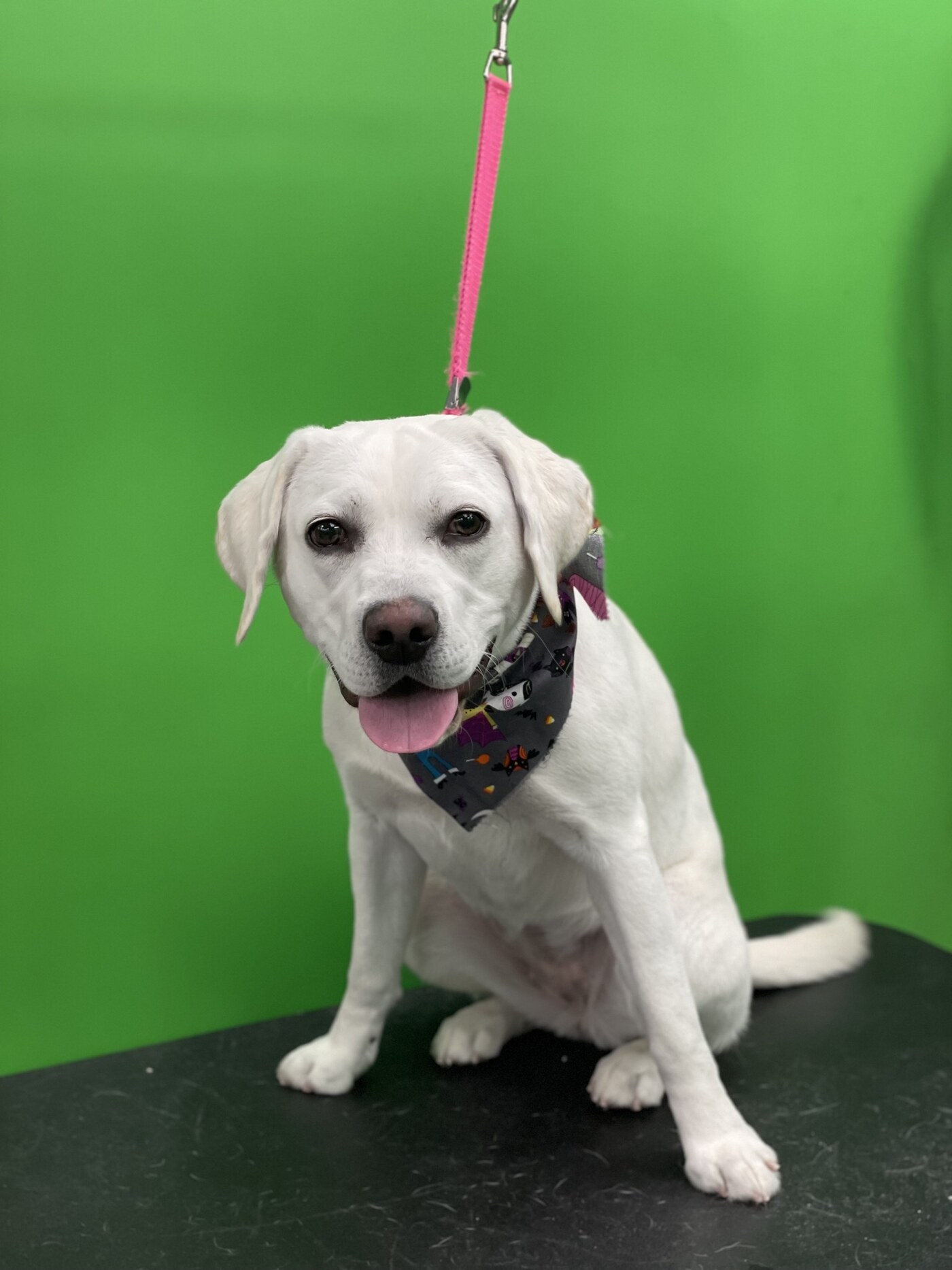
Labrador Retriever Grooming Guide: Shedding, De-Shedding & Coat Care
By Misty Gieczys
June 9, 2026Labrador Retrievers are America’s favorite family dog, and central Ohio is no exception — we see Labs at the salon every single week. They’re also the breed owners most often assume doesn’t need grooming at all. The coat is short, so what’s there to do? A lot, it turns out. That short coat is a dense, double-layered shedding machine, and the difference between a Lab on a real grooming program and a Lab that only gets the garden-hose treatment shows up all over your house. Here’s what every Labrador owner in Columbus should know.
Do Labs Need Professional Grooming?
Yes — and this surprises more owners than any other breed we groom. A Labrador doesn’t need a haircut, but the coat needs real maintenance: a deep bath with the right shampoo, a high-velocity blow-out to push out the dead undercoat, ear cleaning, and proper nail work. The short coat hides an enormous amount of packed, shedding undercoat that a quick home bath never touches. Brushing at home helps, but it doesn’t replace what a professional groom does. Skipping pro grooming isn’t saving your Lab anything — it’s just moving the shedding onto your couch, your car, and your black pants. Ready to hand the undercoat problem to a professional? Book a groom at our Upper Arlington or Westerville salon.
Why You Should Never Shave a Labrador
It sounds absurd to shave a short-coated dog, but we get asked — usually in July, usually by an owner buried in shed hair. Labradors have a true double coat — a soft, dense, water-resistant undercoat beneath a short, straight, slightly oily top coat. That double coat is the breed’s working equipment: it sheds water, blocks sun, insulates against cold, and traps a layer of air that keeps the dog cooler in summer than bare skin would be.
Shaving a Lab removes that protection and can permanently alter how the coat grows back — patchy, fuzzy, or changed in texture. It also doesn’t fix the shedding; it just makes the shed hairs shorter and pricklier. If your Lab seems hot or the shedding is out of control, the answer is a de-shed treatment and a thorough blow-out, not clippers. A reputable groomer will decline to shave a healthy Lab, and we do.
How Often Should You Groom a Labrador?
Professional grooming every 6 to 8 weeks is the standard for a Labrador. The cadence is about coat and skin maintenance, not haircuts — bath, blow-out, sanitary check, paws, ears, and nails. During the heavy shedding seasons (spring and fall), many Lab owners bump up to every 4 to 6 weeks to stay ahead of the coat blow, and frequent swimmers often add bath-and-blow-out visits in between full grooms.
Between appointments, plan on brushing at home once or twice a week as a baseline, and several times a week during shedding season. Ten minutes with the right tool removes a startling amount of hair that would otherwise end up on your floor.
Lab Shedding: Year-Round, Plus Two Coat Blows
Labradors shed year-round — anyone who tells you otherwise has never owned one — but they also have two major “coat blows” each year, one in spring as the winter undercoat releases and one in fall as the summer coat turns over. During these transitions, the volume of hair coming off a Lab can rival breeds twice as fluffy. Because the hairs are short and stiff, they weave into upholstery and carpet in a way long, soft hair doesn’t.
A professional de-shed treatment during these transitions is the single most effective shedding solution there is. The high-velocity dryer pushes the loosened undercoat out in minutes — work that home brushing would take days to replicate, if it could replicate it at all. The first time a Lab owner sees the pile of undercoat that comes off a “short-haired” dog, they almost always ask where it was all hiding. The answer: packed against the skin, waiting for your living room.
The Right Way to Brush a Labrador at Home
Short coats need different tools than fluffy ones — a slicker brush alone barely touches a Lab’s undercoat. Here’s what actually works:
- Use a rubber curry brush and an undercoat rake. The curry brush loosens dead hair and distributes the coat’s natural oils; the short-toothed undercoat rake pulls the dead undercoat out. Together they do what no single brush can.
- Work in circles, then with the grain. Curry in small circular motions to lift the dead coat, then sweep with the lay of the coat to clear it. The hair comes off in clouds when you’ve done it right.
- Focus on the heavy zones. The hindquarters, the base of the tail, the neck, and the flanks hold the most undercoat.
- Brush before baths, not just after. Loosening the dead coat first lets the bath and blow-dry flush far more of it out.
- Don’t over-bathe at home. The slight oiliness of a Lab’s top coat is its water-resistance. Frequent harsh shampooing strips it, leading to dry skin and dander. A proper salon bath with coat-appropriate shampoo cleans without stripping.
Labs and Water: Bathing a Dog That Bathes Itself
Most Labs will fling themselves into any water they can find — ponds, pools, the Scioto, a puddle if nothing better is on offer. That’s the breed working as designed, but it has grooming consequences. Pond and river water leaves bacteria and organic funk in the undercoat; chlorine dries the skin and coat. The routine that keeps a swimming Lab healthy is simple: rinse with fresh water and towel-dry after every swim, and make sure the coat dries fully — a damp undercoat against the skin is a setup for hot spots, which Labs are prone to.
Swimming is not bathing. A Lab that swims weekly still needs real baths on a regular schedule, because swimming adds grime to the coat rather than removing it. Frequent swimmers do well with a salon bath and blow-out between full grooms — the high-velocity dry is the part you can’t replicate at home, and it’s what keeps the undercoat from staying perpetually damp at the skin.
What’s Included in a Labrador Groom at Designer Paws Salon
A full Lab groom typically takes 1.5 to 2.5 hours depending on coat condition and whether a De-Shed Treatment is added. It includes:
- Full body brush-out with curry brush and undercoat rake
- Bath with coat-appropriate shampoo and conditioner
- High-velocity blow-out — this is where the dead undercoat actually comes out
- Sanitary check and paw pad cleanup
- Ear cleaning and inspection — especially important in this breed
- Nail trim or grind
- Finishing cologne and bandana
During shedding season — or any time the shedding at home feels out of control — we recommend adding the De-Shed Treatment: a specialty shampoo and conditioner combination designed to release the undercoat, plus extra blow-out and brushing time. For a Lab in coat blow, it’s the single most effective thing you can do to reduce shedding at home. Between full grooms, our bath services keep frequent swimmers clean and fully dried.
Ear and Nail Care
Labradors combine two risk factors for ear infections: floppy ears that trap moisture, and a love of water that keeps putting moisture there. Ear infections are one of the most common vet visits for the breed, and most are preventable. Dry the ears after every swim and bath, clean them weekly at home, and let us inspect them at every groom. If your Lab is scratching at the ears, shaking the head, or the ears smell yeasty, flag it early.
Nails are the other commonly neglected item. Active Labs wear their nails down somewhat on pavement, but rarely enough — and overgrown nails affect joint alignment and posture, a real issue in a breed already prone to hip and elbow problems. Many Labs have dark nails that are hard to trim at home because you can’t see the quick. Regular salon nail grinds keep things tidy and avoid the orthopedic consequences of long nails.
Start Grooming Your Lab Puppy Early
Lab puppies should start professional grooming as early as possible. A Lab will visit a groomer dozens of times over a long, active life, and a 70-pound adult that hates the dryer is a much harder project than an 8-week-old who learned the salon is a fine place to be. Puppies under 5 months can start with our Puppy Package to build positive associations with handling, baths, blow-outs, and nail work before the adult coat comes in.
Big Labs and Seniors Welcome
Adult Labradors typically weigh 55 to 80 pounds, and plenty of “big-boned” Labs push past that. Our team is set up for big dogs — we groom dogs up to 250 pounds — and we also adjust the appointment for senior Labs with arthritis or mobility issues who can’t stand as long. If your older Lab is struggling to handle a traditional groom, tell us and we’ll plan a gentler session.
Book Your Labrador’s Grooming Appointment
We groom Labs every week at our salon for dog grooming in Upper Arlington and at our Westerville location. Whether your Lab needs a routine bath and blow-out, a seasonal De-Shed Treatment, or a post-pond rescue mission, book an appointment online and let us know what you’re looking for. First-time Lab clients — tell us your dog’s age, weight, whether they swim, and when you last had a professional groom so we can plan the right amount of time. And no, we won’t shave your Lab, no matter how much hair is on your couch.
Related Reading
- Cavalier King Charles Spaniel Grooming Guide: Coat Care, Feathering & Ear Health
- Golden Retriever Grooming Guide: De-Shedding, Coat Care & Why You Shouldn’t Shave
- How Often Should You Groom Your Dog? A Guide by Coat Type
- Why Long Nails Are Stealing Years from Your Dog’s Life
- How to Prevent, Identify, and Safely Remove Matted Dog Hair