
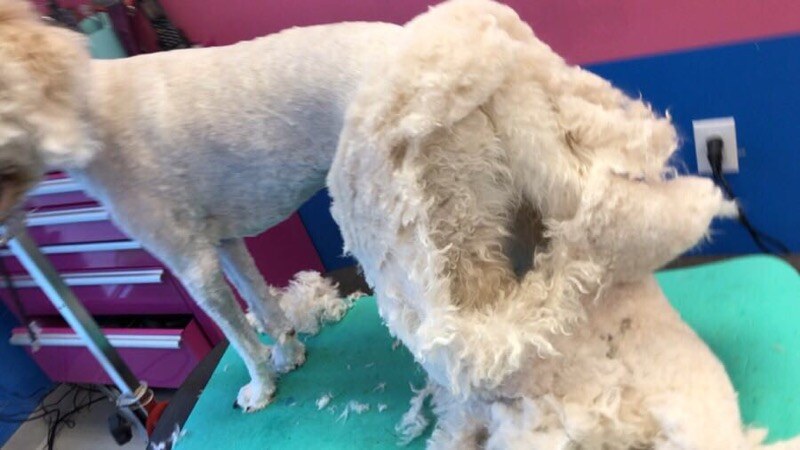
Matted Dog Hair: How to Prevent, Identify, and Safely Remove Mats
By Misty Gieczys
April 13, 2026You’re running your hand along your dog’s coat and your fingers hit a lump — a tight, dense knot of fur that won’t budge. That’s a mat, and if your dog has one, they probably have more. Matting is one of the most common and most misunderstood grooming problems dog owners face, and ignoring it can lead to real health consequences.
What Causes Matted Dog Hair?
Mats form when loose, dead fur tangles around itself and compresses into tight clumps. Friction makes it worse — mats tend to develop in areas where fur rubs against itself or against collars, harnesses, and the ground. The most common mat zones are behind the ears, under the armpits, around the collar line, on the back legs, and around the tail.
Several factors accelerate matting:
- Skipping regular brushing — even a few weeks without brushing can produce mats in longer-coated breeds.
- Getting wet without being dried and brushed out — rain, swimming, snow, and baths without proper drying cause loose fur to clump together as it dries.
- Seasonal coat changes — when dogs blow their undercoat in spring and fall, the shed fur can get trapped beneath the top coat and mat quickly.
- Harnesses and clothing — anything that presses against the coat creates friction points where mats love to form.
Coat type matters too. Curly and drop-coated breeds — Bichons, Poodles, Doodles, Shih Tzus — mat fastest of all. If you have a Bichon, our Bichon Frise grooming guide covers caring for one of the most mat-prone coats there is.
Why Mats Are More Than a Cosmetic Problem
A small mat behind the ear might not seem like a big deal, but mats tighten over time. As they pull closer to the skin, they restrict airflow to the skin beneath them, trapping moisture, dirt, and bacteria. This creates the perfect environment for skin infections, hot spots, and fungal growth — all hidden under the mat where you can’t see them until they’ve become painful.
Severe matting can actually restrict blood flow to the skin. In extreme cases, the skin beneath dense mats can become bruised, raw, or even necrotic. Dogs with full-body matting are in constant discomfort — the pulling sensation on their skin affects every movement.
Can You Brush Out a Mat at Home?
Small, loose mats near the surface of the coat can sometimes be worked out at home with the right tools and technique:
- Hold the base of the mat close to the skin to avoid pulling.
- Use a slicker brush or mat splitter to work from the outer edge of the mat inward — never yank through the center.
- Apply a detangling spray or conditioner to help loosen the fibers.
- Work in short sessions. If your dog shows any sign of pain or stress, stop.
But there’s a line. If the mat is tight against the skin, covers a large area, or your dog flinches when you touch it, do not try to cut it out with scissors. Matted fur pulls the skin up into the knot, and it’s nearly impossible to tell where the mat ends and the skin begins. Scissor injuries from at-home mat removal are one of the most common reasons dogs end up at the emergency vet.
When to Bring Your Dog to a Professional Groomer
A professional groomer has the tools, training, and experience to safely remove mats without injuring your dog. Depending on the severity, your groomer may use a combination of careful brushing, dematting tools, and clipper work to remove the mats while keeping your dog comfortable.
In cases of severe or widespread matting, a full shave-down (often called a “humanitarian clip”) is the safest and most humane option. This allows the skin to breathe and heal, and gives you a clean starting point for building a consistent grooming routine going forward. A good groomer will be honest with you about what’s salvageable and what needs to come off — the goal is always your dog’s comfort first.
How to Prevent Mats From Coming Back
Prevention is always easier than removal. A consistent routine keeps mats from forming in the first place:
- Brush regularly — for long-coated and double-coated breeds, every 2 to 3 days is ideal. Short-coated breeds can get by with weekly brushing.
- Use the right brush — a slicker brush works for most coats. Undercoat rakes are essential for double-coated breeds during shedding season.
- Dry thoroughly after baths and wet weather — never let a long coat air-dry without brushing it out first.
- Keep up with professional grooming — a professional bath and brush-out every 4 to 6 weeks catches early tangles before they become mats.
- Pay attention to friction zones — brush under the armpits, behind the ears, and around the collar line even when the rest of the coat looks fine.
Matting Is Preventable — Your Dog Is Counting on You
Matted fur isn’t just an appearance issue. It causes real pain and can lead to infections your dog can’t tell you about. The best thing you can do is commit to a brushing routine at home and keep up with regular professional grooming visits.
If your dog is already matted and you’re not sure what to do, bring them in to Designer Paws Salon. We’ll assess the situation honestly, remove the mats safely, and help you build a plan to keep them mat-free going forward. We see matted dogs regularly at both our Upper Arlington and Westerville locations — there’s no judgment, just help.
Related Reading
- Goldendoodle Grooming Guide: Coat Care, Haircuts & Brushing Tips
- Bichon Frise Grooming Guide: Coat Care, Haircuts & the Round Head Cut
- Bernedoodle Grooming Guide: Coat Care, Haircuts & Summer Cuts
- Shih Tzu Grooming Guide: Coat Care, Haircuts & Topknot Styling
- Golden Retriever Grooming Guide: De-Shedding, Coat Care & Why You Shouldn’t Shave
- How Often Should You Groom Your Dog? A Guide by Coat Type