
The Silent Ticking Clock: Why Long Nails Are Stealing Years From Your Dog’s Life
By Misty Gieczys
May 12, 2025We love pampering our furry companions, showering them with toys, treats, and endless affection. But one crucial aspect of their well-being often gets overlooked: nail care. While it might seem like a minor detail, neglecting your dog’s nails can have significant and long-lasting negative impacts on their health, potentially even shortening their precious time with you.
Think about it — your dog’s paws are their foundation. They support their entire weight, allow them to run, jump, and explore the world. When their nails are excessively long, they disrupt this natural balance, leading to a cascade of problems that can affect their comfort and longevity.
The Immediate Discomfort: More Than Just Annoying Clicks
Before we even get to the long-term health consequences, long nails cause immediate discomfort and practical issues:
- Altered Gait: When nails grow too long, they hit the ground with each step, forcing the toes to twist and splay. This unnatural positioning puts stress on the paw joints and changes your dog’s natural gait.
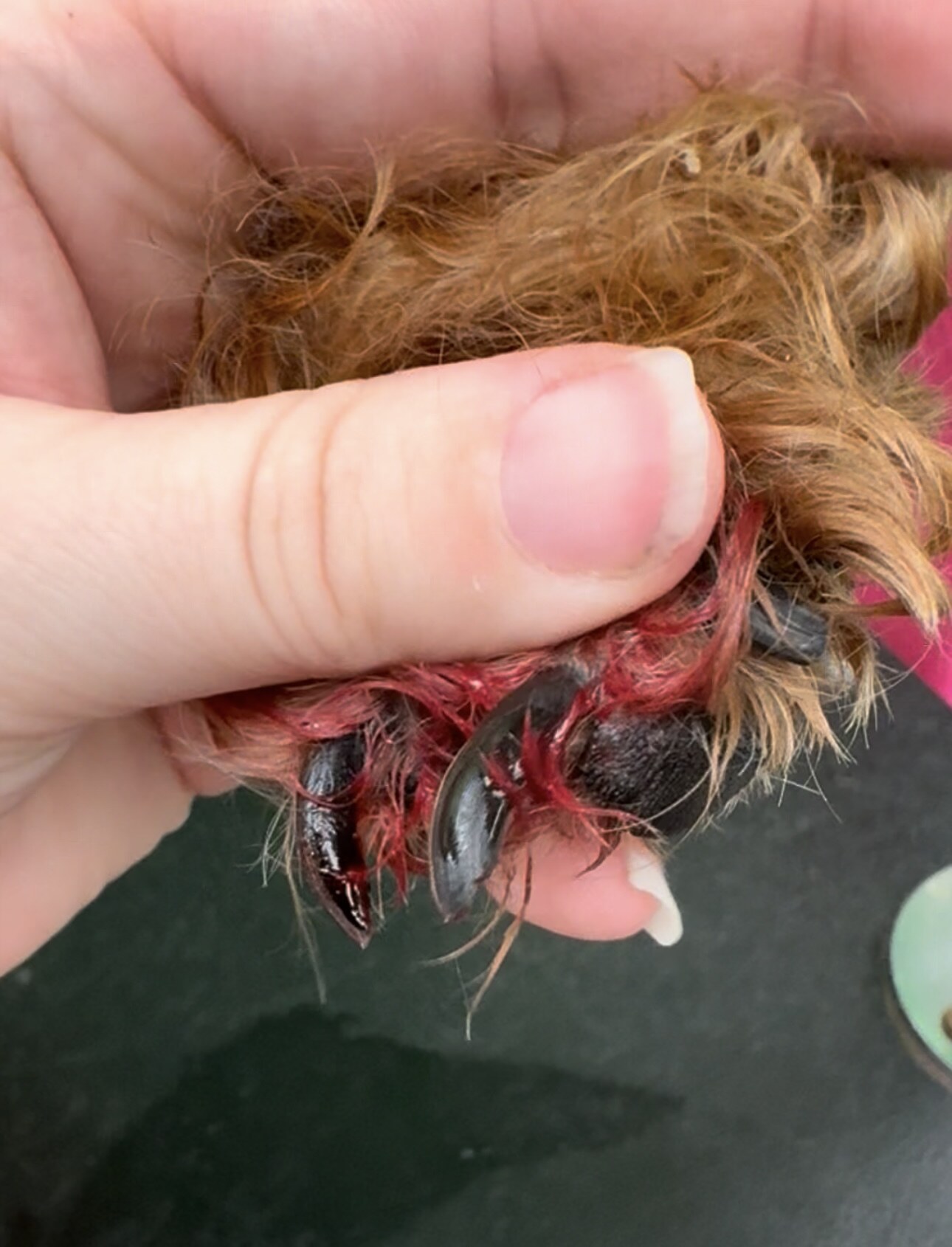
- Pain and Injury: Overgrown nails can catch on carpets, furniture, or outdoor surfaces, leading to painful tears, breaks, or the nail growing into the paw pad (ingrown nails). These injuries are uncomfortable and prone to infection.
- Difficulty Walking and Running: Imagine trying to walk or run with stones constantly pressing against the tips of your toes. Long nails create a similar sensation for your dog, making movement awkward, hesitant, and even painful.
The Long-Term Threat: Premature Arthritis and a Reduced Lifespan
This is where the silent ticking clock comes in. The chronic stress and unnatural positioning caused by consistently long nails have a profound impact on your dog’s musculoskeletal system over time:
- Premature Arthritis in the Feet: Constant pressure and twisting of the toe joints accelerates the wear and tear on cartilage. This leads to premature arthritis specifically in the feet.
- Ripple Effect Up the Leg: The pain and altered mechanics don’t stay isolated. To compensate, your dog shifts weight and adjusts their movement. That compensation travels up the leg, putting undue stress on the ankle, knee, and hip joints.
- Impact on the Back: Eventually, these compensatory movements affect the spine. Misalignment and added strain contribute to back pain and arthritis in the back as well.
- Reduced Quality of Life: Living with chronic pain from arthritis significantly reduces your dog’s quality of life. They become less active, less playful, and experience discomfort with everyday movements.
- Potentially Shorter Lifespan: Chronic pain and reduced mobility from premature arthritis can indeed take years off your dog’s life. Pain leads to decreased activity, potential weight gain, and ongoing stress that impacts overall longevity.
Frequently Asked Questions
Why are overgrown nails bad for dogs?
Overgrown nails force the toes to twist and splay with each step, altering the dog’s natural gait. That unnatural positioning stresses the paw joints, then travels up the leg to the ankle, knee and hip, and eventually the back. Long-term it accelerates cartilage wear and causes premature arthritis in the feet, then up the leg.
Can long dog nails cause limping?
Yes. Long nails change paw mechanics: as the nails press into the floor, they push the toes upward and shift the dog’s weight backward off the front paws. That altered gait causes muscle strain, joint inflammation, and the limp some owners mistake for an injury or early arthritis. Trimming the nails back to a healthy length usually resolves the limp within a week or two — sometimes sooner.
Do long nails hurt dogs?
Yes, and the pain is constant rather than occasional. Each step transfers force back into the nail bed and toe joints, similar to how a too-tight shoe would feel on a person. Chronic nail-bed pressure is also a leading reason dogs avoid hard floors, sit down on walks, and pull their paws away during exams. The dog may not vocalize the pain, but the avoidance behavior is the tell.
What happens when a dog’s nails get too long?
First the nails start clicking on hard floors. Within a few weeks, the toes splay, the gait shortens, and the dog shifts weight backward to relieve pressure on the front paws. Left longer, the nails curl into the paw pads — an emergency vet visit — or the quick (the blood vessel inside the nail) grows out toward the tip, making it impossible to safely trim short again without bleeding. The longer it goes, the longer it takes a groomer to safely walk the nails back to a healthy length, often across multiple appointments spaced 1–2 weeks apart.
How often should a dog get a nail trim?
Most dogs need a nail trim every 2 to 4 weeks, depending on breed, lifestyle, and the surfaces they walk on. A reliable cue: if you can hear the nails clicking on hard floors, they are already too long.
What are the warning signs that a dog’s nails are too long?
Audible clicking on hard floors, nails touching the ground when the dog stands square, catching on carpet or furniture, splayed toes, ingrown nails, and reluctance to walk on slick surfaces. Any of these means the nails have been too long for a while already.
Can long nails actually shorten a dog’s lifespan?
Indirectly, yes. Chronic joint pain from overgrown nails leads to less activity, potential weight gain, and ongoing stress on the body. Premature arthritis and reduced mobility together lower quality of life and can shave years off your dog’s time with you. Regular nail trims are one of the cheapest and most effective ways to protect long-term joint health.
Should I trim my dog’s nails at home or book a professional?
Either works if the job actually gets done. A professional groomer or veterinarian is the safer choice for dogs with dark nails where the quick is hard to see, anxious dogs, dogs whose nails have been allowed to grow long, and dogs whose nail beds have receded. Designer Paws Salon offers standalone nail trims at the Upper Arlington location — no full groom required.
Take Action for Your Dog’s Future
Regular nail trims are a non-negotiable part of routine care. How often depends on breed, lifestyle, and the surfaces your dog walks on, but every 2–4 weeks is a reliable guideline. Don’t wait until you hear the click-clack on your hard floors — that sound means the nails are already too long.
Overgrown nails rarely travel alone — coats that miss grooming appointments develop tangles too. If your dog’s fur has started clumping, our guide to matted dog hair covers how to spot mats early and remove them safely.
Whether you trim them yourself or entrust the job to a professional, keeping nails at a healthy length is an investment in your dog’s comfort, mobility, and lifespan. If you’re looking for professional dog grooming in Columbus, Ohio, you can book a standalone nail trim at our Upper Arlington salon or include trims as part of a regular bathing appointment at either location.
Don’t let the silent ticking clock of overgrown nails steal precious years from your companion. Make nail care a routine, and ensure your dog can enjoy a happy, healthy, pain-free life by your side.
Book a Nail Trim in Columbus
Standalone nail trims are available at our Upper Arlington salon on Fishinger Road — no full groom required — or add a trim to a bathing appointment at either location. Book an appointment online in a few minutes, or call us at 614-948-7800.