
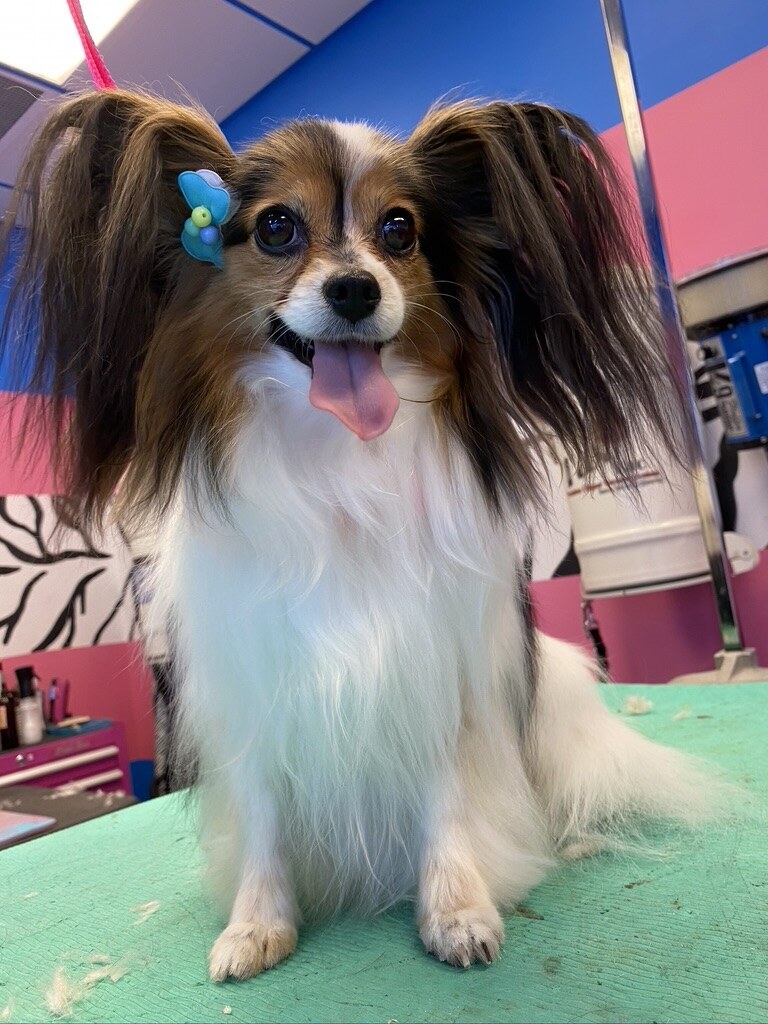
Papillon Grooming Guide: Coat Care, Ear Fringes & Shedding
By Misty Gieczys
June 9, 2026Papillons are one of the easiest breeds to underestimate at the grooming table. They’re tiny, elegant, and famous for the butterfly ears that give the breed its name — “papillon” is French for butterfly. New owners often hear “low-maintenance coat” and assume that means no grooming at all. The truth sits in the middle: Papillons are easier than most long-coated breeds, but the fringes, nails, and teeth all need a real routine. Here’s what every Papillon owner in Columbus needs to know.
The Papillon Coat: Single, Silky, and No Undercoat
Papillons have a single coat — long, fine, straight, and silky, with no undercoat underneath it. That one fact drives almost everything about grooming this breed. Without a dense undercoat shedding into the top layer and locking together, Papillon coats resist matting far better than a Shih Tzu, Bichon, or doodle coat. The hair lies flat, parts naturally, and stays surprisingly clean — dirt tends to dry and fall out of a healthy Papillon coat rather than working into it.
The coat isn’t uniform, though. The body hair is moderate in length, but the breed carries dramatic fringes — the long hair on the ears, the “culottes” on the back of the thighs, the chest frill, and the plumed tail arching over the back. The fringes are where the breed’s elegance lives, and where nearly all of its grooming problems happen. If the fringes are already past what home brushing can fix, book a groom at our Upper Arlington or Westerville salon.
Do Papillons Need Haircuts?
Mostly, no — and this surprises a lot of owners. The Papillon coat reaches a natural length and stops; it doesn’t grow continuously the way a Poodle or Shih Tzu coat does. A Papillon never needs a full-body haircut, and we don’t recommend one. Cutting into the fringes ruins the breed’s signature look, and ear fringe in particular can take a year or more to grow back.
What a Papillon does need is hygiene trimming: a sanitary trim to keep the rear clean, paw pad cleanup so the feet grip on hard floors, and a light tidy around the feet. That’s it. If a groomer suggests clipping your Papillon’s body short for convenience, push back — a single-coated breed this easy to brush doesn’t need it, and the coat protects the skin and helps regulate temperature.
How Often Should You Groom a Papillon?
Professional grooming every 6 to 8 weeks is the standard for a Papillon. Because there’s no haircut to maintain, the cadence is about everything else: a proper bath and blow-dry, fringe detangling, sanitary and paw trims, ear cleaning, and nail work.
Between appointments, Papillons need brushing 2 to 3 times a week — one of the lightest at-home workloads of any long-coated breed. During seasonal shedding, bump that to every day or two to keep loose hair off your furniture and out of the fringes.
Do Papillons Shed?
Yes, but modestly. Papillons shed lightly year-round and a bit more heavily in spring and fall. Because there’s no undercoat, you’ll never see the dramatic “coat blow” that double-coated breeds like Golden Retrievers go through — what you’ll notice is fine, silky hairs on dark clothing and furniture, increasing for a few weeks during the seasonal turnover.
The fix is simple: more frequent brushing during shedding season, plus a bath and thorough blow-dry to release the loose hair all at once. If your Papillon suddenly sheds far more than usual outside these seasonal patterns, mention it — abnormal coat loss in this breed is worth a vet conversation.
The Right Way to Brush a Papillon at Home
Papillon brushing is quick, but technique still matters — the fine, silky hair breaks if you handle it roughly. Here’s the approach that works:
- Use a pin brush and a metal comb. The pin brush is gentle on the fine hair; the comb verifies the fringes are genuinely tangle-free. A harsh slicker dragged through a Papillon coat shreds fringe you can’t get back for months.
- Mist before you brush. Never brush a bone-dry Papillon — the fine hair builds static and snaps. A light spray of water or leave-in conditioner makes the brush glide.
- Work the fringes carefully. Ear fringes, culottes, chest frill, and tail plume are where tangles form. Hold the fringe at the base and comb from the ends upward so you’re never pulling against the ear or tail itself.
- Check the friction zones. Behind the ears, under the collar or harness, and in the armpits are the only spots where a Papillon will genuinely mat. If your dog wears a harness daily, comb those areas every couple of days.
- Brush before every bath. Water tightens existing tangles into knots — true for every coated breed, including this one.
Caring for the Butterfly Ear Fringes
The ear fringes are the breed’s crown jewels, and they take the most attention of any part of the dog. The long hair flowing off the ear tangles where it rubs — against the head, the collar, or the other ear when your dog sleeps curled up. A few specifics:
- Comb the fringes every other day, supporting the ear so you’re never tugging at the leather. A small knot caught early is a ten-second fix; a neglected one means losing fringe that took a year to grow.
- Watch for food and water contact. Long ear fringe drags through bowls. Narrower bowls help — better than letting the fringe stain and stiffen.
- Don’t trim the fringe to “fix” tangles. A groomer who knows the breed can work most tangles out without cutting. Trimming is the last resort, and we treat it that way.
- Drop-eared Papillons exist too. The Phalène variety carries the same fringe on dropped ears, which reduces airflow into the ear canal — Phalène ears need more frequent checks for moisture and odor.
Nails, Ears, and Teeth: Where Papillons Actually Need the Work
Because the coat is so easy, the real maintenance in this breed shifts to everything else:
- Nails grow fast and get missed. Papillons are light — often 5 to 10 pounds — and many don’t wear their nails down naturally, even with daily walks. Overgrown nails change how a tiny dog stands and moves. Regular salon nail trims or grinds keep things tidy.
- Ears are generally healthy on the upright-eared variety, since erect ears ventilate well. Routine cleaning and inspection at each groom is usually all they need; Phalènes warrant closer attention.
- Teeth are the breed’s weak point. Like most toy breeds, Papillons are prone to dental disease — crowded teeth in a small jaw accumulate tartar quickly. At-home tooth brushing several times a week, plus regular veterinary dental care, matters more for a Papillon’s long-term health than anything we do to the coat.
What to Expect at a Papillon Grooming Appointment
A full Papillon groom at Designer Paws Salon typically takes 1 to 1.5 hours — shorter than most coated breeds because there’s no haircut. It includes:
- Full brush-out with careful fringe detangling
- Bath with coat-appropriate shampoo and a light conditioner to protect the silky hair
- Gentle blow-dry — fine single coats dry quickly and we keep the heat low
- Sanitary trim and paw pad cleanup
- Light tidy of the feet; fringes left natural unless you request otherwise
- Ear cleaning and inspection
- Nail trim or grind
- Finishing cologne and bow or bandana
If your Papillon arrives with tangled or knotted fringe, we’ll work it out by hand wherever possible rather than cutting. Fringe grows back slowly, and we’d rather spend the extra time than cost you a year of regrowth.
Senior Papillons: Adjust the Plan
Papillons are one of the longest-lived breeds we groom — 14 to 16 years is common. Senior Papillons often have thinner coats, more delicate skin, and less patience for standing on the table. Shorter sessions, a gentler dry, and calmer handling all become more important. If your senior Papillon is struggling at the salon, tell us — we’ll plan a session that fits what they can handle comfortably.
Start Grooming Your Papillon Puppy Early
Papillon puppies should start salon visits early, even though the puppy coat needs almost nothing. The adult coat and full fringes don’t come in until 12 to 18 months — sometimes later — and the goal of early appointments is temperament, not styling. A tiny breed that learns to relax through handling, baths, dryers, and nail work as a puppy will be easy at the salon for the next decade and a half. Puppies under 5 months can start with our Puppy Package to build those habits before the adult coat comes in.
Book Your Papillon’s Grooming Appointment
We groom Papillons at our salon for dog grooming in Upper Arlington and at our Westerville location. Whether your Papillon needs a routine bath and fringe detangle, a nail trim between grooms, or help recovering tangled ear fringe, book an appointment online and let us know what you’re looking for. First-time Papillon clients — tell us your dog’s age and whether you’re growing the fringes out so we can plan the right approach. And don’t worry: we won’t cut the butterfly ears.
Related Reading
- Cavalier King Charles Spaniel Grooming Guide: Coat Care, Feathering & Ear Health
- Shih Tzu Grooming Guide: Coat Care, Haircuts & Topknot Styling
- Golden Retriever Grooming Guide: De-Shedding, Coat Care & Why You Shouldn’t Shave
- How to Prevent, Identify, and Safely Remove Matted Dog Hair
- How Often Should You Groom Your Dog? A Guide by Coat Type