
Shih Tzu Grooming Guide: Coat Care, Haircuts & Topknot Styling
By Misty Gieczys
April 20, 2026Shih Tzus are one of the most enduring salon breeds in Columbus — small, sweet, and carrying one of the most beautiful coats in the dog world. But that silky, flowing coat is also one of the most misunderstood. Most new Shih Tzu owners don’t realize they’ve taken on a breed that can require daily grooming attention to stay comfortable. Here’s what every Shih Tzu owner needs to know.
The Shih Tzu Coat: Silky, Double, and Always Growing
Shih Tzus have a double coat — a soft undercoat beneath a long, silky outer coat — and unlike most double-coated breeds, the outer coat grows continuously. That means a Shih Tzu in “full coat” can have hair that sweeps the floor if it’s never cut. It also means the coat will tangle and mat with even minor neglect, because every day of growth is another day for the undercoat to shed into the top layer and lock together.
The coat is straight and silky when healthy, with a natural shine when well-conditioned. It’s very different from a Poodle or doodle coat — it doesn’t curl, and it doesn’t do well with the same brushing techniques. A Shih Tzu needs a pin brush for the length and a metal comb for verification, not the aggressive slicker brush used on curly coats.
How Often Should You Groom a Shih Tzu?
Professional grooming every 4 to 6 weeks is the standard for Shih Tzus in a pet clip. Owners keeping a longer “full coat” style should expect to come in every 3 to 4 weeks for baths, conditioning, and upkeep — long Shih Tzu coats simply don’t stay clean or tangle-free long enough to stretch past that.
Between appointments, Shih Tzus need daily or near-daily attention. That doesn’t always mean a full line brushing — but the face, beard, and areas behind the ears absolutely need daily care to stay clean and mat-free.
The Right Way to Brush a Shih Tzu at Home
Shih Tzu coats are delicate. Aggressive brushing breaks the hair shaft and leads to the fuzzy, damaged ends that make a coat look dull no matter how clean it is. Here’s the technique that actually works:
- Use a pin brush first, then a metal comb. The pin brush is gentle on the length; the comb verifies that you’ve actually reached the skin. If the comb snags, there’s a tangle the brush missed.
- Mist the coat lightly before brushing. Never brush a bone-dry Shih Tzu coat — it creates static and breakage. A light spray of water or leave-in conditioner makes the brush glide.
- Line brush in sections. Part the coat and work layer by layer from the skin outward, same as on any long-coated breed.
- Focus on the problem zones. Behind the ears, the beard, the armpits, and the backs of the rear legs are where Shih Tzu mats form first.
- Clean the face daily. Food, water, and tears build up in the beard and around the eyes every single day. Wipe the face with a damp cloth after meals and water breaks — otherwise the beard stains and hardens.
Managing the Shih Tzu Face: Eyes, Beard, and Topknot
The face is where most Shih Tzu owners struggle, and it’s also where the breed is most distinctive. A few specifics:
- Eye staining is common and has several causes — tear duct anatomy, diet, water mineral content, and hair falling into the eye. Daily face wiping is the single biggest thing owners can do. A good groomer can also shape the hair around the eyes to keep it out of the tear line.
- The beard holds on to everything. Some owners choose a shorter “schnauzer-style” muzzle trim rather than the traditional flowing beard. It’s a legitimate option if the beard is constantly staining and matting.
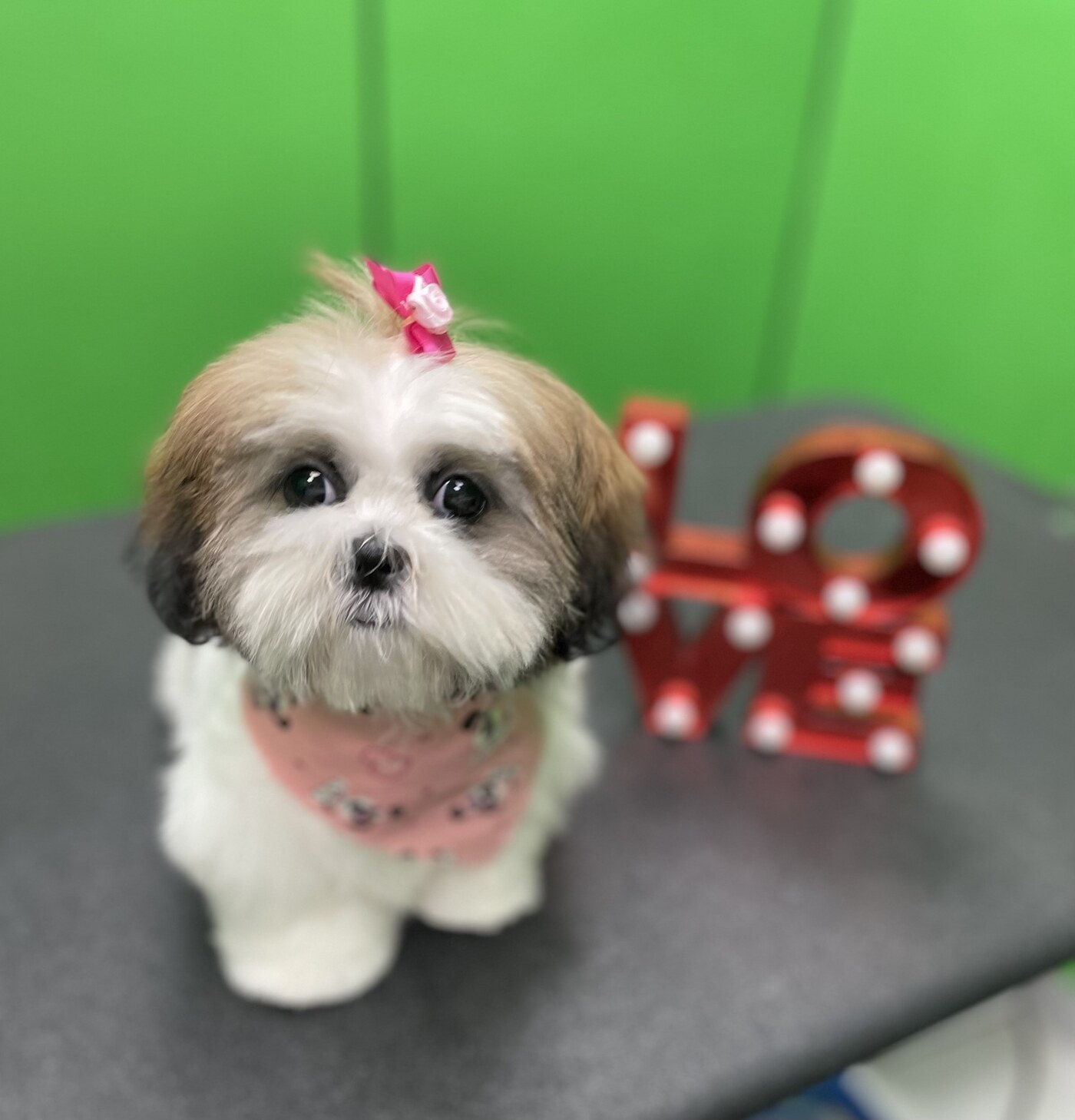
- The topknot is optional, not required. For long-coated Shih Tzus, pulling the top hair up into a small topknot keeps it out of the eyes and shows off the face. A plain rubber band works; decorative bows are personal preference. Pet-clip Shih Tzus usually skip the topknot entirely.
Popular Shih Tzu Haircut Styles
Shih Tzus offer more styling flexibility than almost any other breed we groom. The most common choices:
- Full coat — the traditional long-coated look, with hair sweeping the floor. Shows the breed at its most dramatic but requires daily brushing and frequent salon visits. Almost nobody outside the show ring keeps a Shih Tzu in true full coat.
- Teddy bear cut — the most popular pet style. Body at 1 to 2 inches, rounded face, feet and ears shaped to match. Adorable and practical.
- Contour — even length all over, typically under an inch. The lowest-maintenance option and a good choice for active Shih Tzus or senior dogs where long coat care becomes a burden.
- Asian Fusion — signature rounded face, often with a cleaner muzzle and dramatic ear feathering. Shih Tzus are one of the classic breeds for this styling. Read more about Asian Fusion grooming.
- Top-knot-and-skirt — a compromise: body trimmed down for practicality, head and ears kept longer for the traditional Shih Tzu face. Good middle ground for owners who love the look but can’t keep up with full coat.
Shih Tzu Ears Need Attention
Shih Tzu ears are heavy, low-set, and covered in hair — a combination that traps moisture and blocks airflow, which makes ear infections common. Regular ear cleaning at home (weekly, not monthly) and inspection at every grooming appointment catches problems early. If your Shih Tzu scratches at the ears, shakes the head a lot, or the ears smell off, flag it at the next appointment or see your vet.
What to Expect at a Shih Tzu Grooming Appointment
A full Shih Tzu groom at Designer Paws Salon typically takes 3 to 4 hours depending on coat length and style. It includes:
- Full body brush-out and dematting assessment
- Bath with coat-appropriate shampoo and conditioner
- Blow-dry and straightening of the silky coat
- Full body haircut to your preferred style
- Face shaping, beard trim, and topknot if desired
- Ear cleaning, inner-ear hair removal, and nail trim or grind
- Finishing cologne and bow or bandana
If your Shih Tzu arrives with significant matting, we’ll talk through the options. A longer style isn’t always humane when matting is severe — a shorter reset cut can be the kinder choice, and Shih Tzu coats grow back relatively quickly.
Senior Shih Tzus: Adjust the Plan
Shih Tzus are a long-lived breed — many live 14 years or more — and grooming needs shift as they age. Seniors often can’t stand as long, don’t tolerate full baths as well, and have thinner skin that requires a gentler touch. Shorter styles, split-session grooms, and calmer handling all become more important. If your senior Shih Tzu is struggling at the salon, tell us — we can adjust the plan to fit what they can handle comfortably.
Start Grooming Your Shih Tzu Puppy Early
Shih Tzu puppies should start professional grooming as early as possible. The puppy coat transitions to the adult coat between 10 and 12 months, and early, positive salon experiences set the tone for the next decade-plus of appointments. Puppies under 5 months can start with our Puppy Package to build positive grooming habits before the adult coat comes in.
Related Reading
If you’re comparing breed coats, our guides on Goldendoodle grooming and Bernedoodle grooming cover the curly/wavy doodle coats, which need a very different approach than the silky Shih Tzu coat.
Book Your Shih Tzu’s Grooming Appointment
We groom Shih Tzus every week at both our Upper Arlington and Westerville locations. Whether your Shih Tzu wears a teddy bear cut, a full coat with topknot, or something in between, book an appointment online and let us know the style you’re going for. First-time Shih Tzu clients — tell us your dog’s age, current coat length, and whether you’d like the Asian Fusion rounded-face shape so we can plan the right amount of time.
Related Reading
- Golden Retriever Grooming Guide: De-Shedding, Coat Care & Why You Shouldn’t Shave
- Bichon Frise Grooming Guide: Haircuts, Brushing & the Round Head Cut
- Samoyed Grooming Guide: De-Shedding, Double Coat & Why You Shouldn’t Shave
- How to Prevent, Identify, and Safely Remove Matted Dog Hair
- How Often Should You Groom Your Dog? A Guide by Coat Type