
Bichon Frise Grooming Guide: Coat Care, Haircuts & the Round Head Cut
By Misty Gieczys
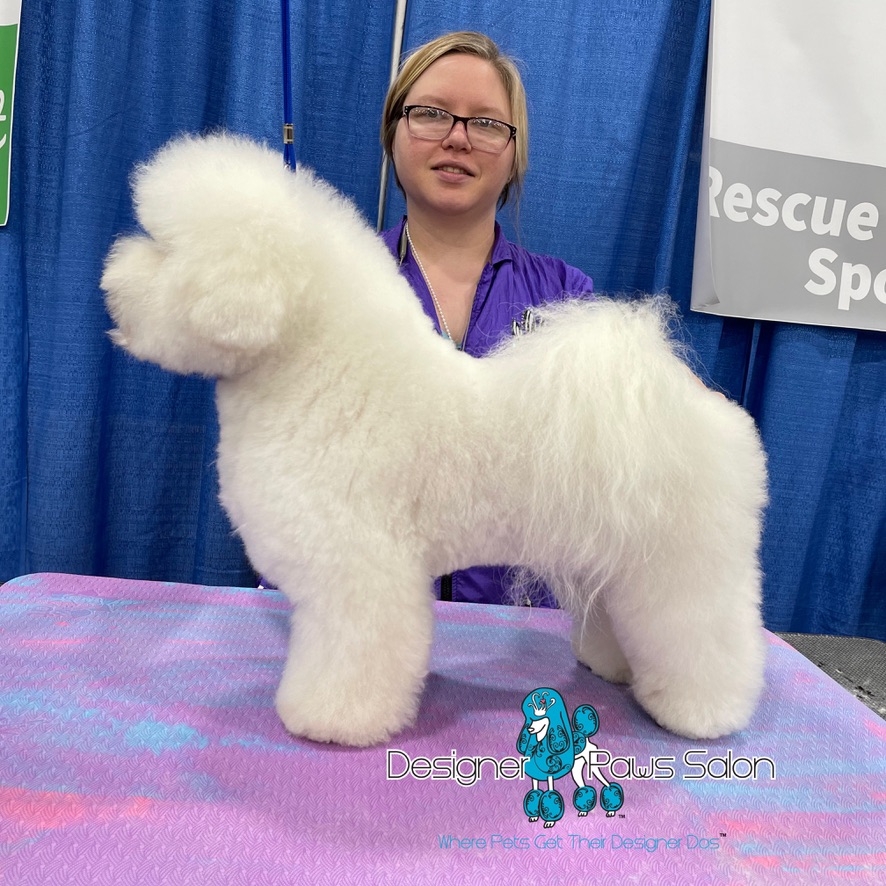
April 29, 2026Bichon Frises are one of the most recognizable salon breeds in Columbus — small, white, and built around one of the most sculpted coat styles in the dog world. The classic “powder puff” head and round, fluffy body are gorgeous, but they don’t happen by accident. Bichon coats are some of the hardest-working coats we groom, and most new Bichon owners underestimate just how much maintenance the breed asks for. Here’s what every Bichon Frise owner needs to know.
The Bichon Coat: Double, Curly, and Always Growing
Bichons have a true double coat — a soft, dense undercoat beneath a curly, springy outer coat. Like Poodles, the outer coat grows continuously and doesn’t shed in the typical sense. That low-shed quality is part of what makes Bichons popular with allergy-sensitive families, but it comes with a tradeoff: every hair the dog loses stays trapped in the coat instead of falling to the floor. Combined with the dense undercoat, that’s a recipe for matting that forms faster than almost any other breed.
Bichon coats also have a unique “spring” — properly groomed and fluff-dried, the coat stands away from the body and gives the breed its signature round, cloud-like silhouette. This isn’t just styling. The bounce is built into the coat texture, and the right drying technique is what brings it out.
How Often Should You Groom a Bichon Frise?
Professional grooming every 4 to 6 weeks is the standard for Bichons. Owners keeping the classic show-style round head should expect to come in closer to every 3 to 4 weeks — the head shaping needs frequent touch-ups to keep the symmetry. Stretching past 6 weeks almost always means dealing with matting at the next appointment, no matter how diligent the at-home brushing has been.
Between appointments, Bichons need thorough at-home brushing every 1 to 2 days, done line by line from root to tip. The dense undercoat is the reason — it builds up quickly and traps shed hair against the skin. Most matted Bichons we see at the salon have owners who brush daily but only on the surface; the comb never reaches the skin.
The Right Way to Brush a Bichon at Home
Bichon coats reward technique more than effort. A quick once-over with a slicker brush feels productive but barely touches the layer where mats actually form. Here’s the approach that works:
- Use a slicker brush and a metal comb. The slicker lifts and separates the curls. The metal comb is your verification tool — if the comb won’t glide from skin to tip, there’s matting hidden under the fluff.
- Line brush in sections. Part the coat and work one layer at a time, brushing from the skin outward. Bichon coats are too dense for surface brushing to reach the undercoat.
- Mist before you brush. Never brush a bone-dry Bichon coat — it creates static, breakage, and frizz. A light spray of water or leave-in conditioner makes the slicker glide and protects the coat.
- Hit the danger zones first. Behind the ears, the beard, the armpits, around the collar, the chest, and the back of the rear legs are where Bichon mats form first.
- Brush before every bath. Water tightens any existing tangles into solid mats. Never bathe a Bichon without a full brush-out first.
Tear Staining and the White-Coat Problem
Bichons are almost always white, and that bright coat shows every stain. Tear staining around the eyes is the most common cosmetic complaint we hear from Bichon owners, and saliva staining on the beard and paws runs a close second. A few specifics:
- Daily face wiping is the single biggest thing owners can do. A damp cloth or a face-safe pet wipe across the eye area and beard, every day, prevents the buildup that turns into permanent rust-colored stains.
- Hair around the eyes should be kept short enough not to wick tears across the face. A good groomer will shape the corner-of-eye hair specifically to address this.
- Whitening shampoo at the salon helps brighten the coat, but it can’t undo staining that has already set into the hair shaft. Prevention beats treatment.
- Diet, water, and tear duct anatomy all contribute. If staining is dramatic and worsening, it’s worth a vet conversation — sometimes there’s a blocked tear duct or food sensitivity at the root.
Popular Bichon Frise Haircut Styles
Bichons offer more styling flexibility than most owners expect. The style you choose has a big impact on how much maintenance the dog needs between grooms:
- Classic round head (show-style pet cut) — the iconic Bichon look, with a perfectly round head, sculpted face, and full-bodied coat. Beautiful, but requires frequent salon visits and committed daily brushing at home.
- Teddy bear cut — a softer, more practical version of the classic look. Round face, body kept at 1 to 1.5 inches, lower maintenance than the show-style head. Most popular pet style.
- Contour — even length all over, typically under an inch. The lowest-maintenance option and a good choice for active Bichons or seniors where long coat care becomes a burden.
- Short summer cut — body clipped to half an inch or less, head and ears kept fuller. Practical for Ohio summers and a good reset after a matting situation.
- Panda cut — shorter body with slightly fuller legs and a rounded head. A balanced middle ground between the show-style and a true puppy cut.
Why Drying Technique Matters So Much for Bichons
If there’s one thing that separates a Bichon groomed at a real salon from a Bichon groomed at a chain shop, it’s the drying. Bichons need a high-velocity blow-dry that lifts and separates the curl while the coat is still damp — what groomers call “fluff drying.” Skipping this step or kennel-drying a Bichon (letting them air-dry in a kennel with a dryer pointed at them) leaves the coat flat, frizzy, and impossible to scissor cleanly. The signature round Bichon silhouette is built during the dry, not the cut. At Designer Paws Salon, every Bichon gets a hand-finished fluff dry — it’s part of why the appointment takes the time it does.
Bichon Ears Need Attention
Bichons have drop ears with hair growing inside the ear canal — a combination that traps moisture and blocks airflow, which makes ear infections common in the breed. Inner-ear hair removal is part of every full groom at our salon. Between appointments, weekly ear inspection at home catches problems early. If your Bichon scratches at the ears, shakes the head a lot, or the ears smell off, flag it at the next appointment or see your vet.
What to Expect at a Bichon Grooming Appointment
A full Bichon groom at Designer Paws Salon typically takes 2 to 3 hours depending on coat condition and style. A full groom includes:
- Full body brush-out and dematting assessment
- Bath with coat-appropriate shampoo, whitening shampoo as needed, and conditioner
- High-velocity fluff dry to lift the curl (critical for the Bichon silhouette)
- Full body haircut to your preferred style
- Round head shaping, face trim, and beard work
- Ear cleaning, inner-ear hair removal, and nail trim or grind
- Sanitary trim and paw pad cleanup
- Finishing cologne and bow or bandana
If your Bichon arrives heavily matted, we’ll talk through the options. A longer style isn’t always humane when matting is severe — a shorter reset cut is the kinder choice, and Bichon coats grow back relatively quickly.
Senior Bichons: Adjust the Plan
Bichons are a long-lived breed — many live 14 to 16 years — and grooming needs shift as they age. Seniors often can’t stand as long, don’t tolerate full baths as well, and have thinner skin that requires a gentler touch. Shorter styles, split-session grooms, and calmer handling all become more important. If your senior Bichon is struggling at the salon, tell us — we can adjust the plan to fit what they can handle comfortably.
Start Grooming Your Bichon Puppy Early
Bichon puppies should start professional grooming as early as possible. The puppy coat transitions to the adult coat between 8 and 12 months, and that transition is when matting problems typically start. Puppies under 5 months can start with our Puppy Package to build positive grooming habits before the adult coat comes in. Early, low-stress exposure pays off for the next 14-plus years of appointments.
Book Your Bichon’s Grooming Appointment
We groom Bichon Frises every week at both our Upper Arlington and Westerville locations. Whether your Bichon wears the classic round head, a practical teddy bear cut, or a short summer clip, book an appointment online and let us know the style you’re going for. First-time Bichon clients — tell us your dog’s age, current coat length, and whether you’d like the show-style round head or a softer pet shape so we can plan the right amount of time.
Related Reading
- Goldendoodle Grooming Guide: Coat Care, Haircuts, and Brushing Tips
- Bernedoodle Grooming Guide: Coat Care, Haircuts & Summer Cuts
- Shih Tzu Grooming Guide: Coat Care, Haircuts & Topknot Styling
- Samoyed Grooming Guide: De-Shedding, Double Coat & Why You Shouldn’t Shave
- How to Prevent, Identify, and Safely Remove Matted Dog Hair
- How Often Should You Groom Your Dog? A Guide by Coat Type