
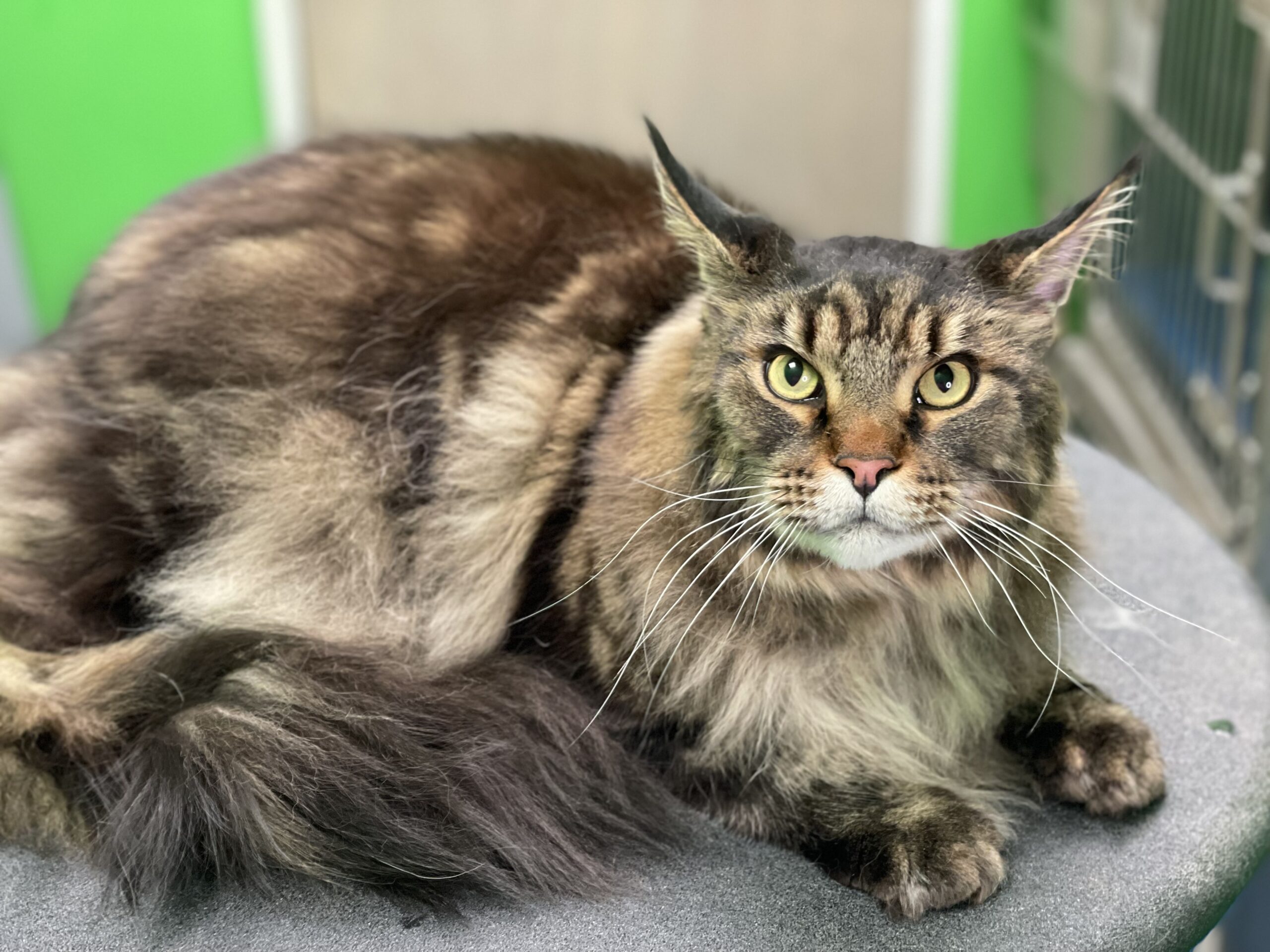
Maine Coon Grooming Guide: Coat Care, Bathing & Professional Grooming
By Misty Gieczys
April 13, 2026Maine Coons are one of the most popular cat breeds in the United States — and one of the most demanding when it comes to grooming. Their thick, semi-long coat, heavy undercoat, and sheer size make them a grooming challenge that most cat owners aren’t fully prepared for. Here’s what every Maine Coon owner in Columbus needs to know about keeping that coat healthy.
Why Maine Coon Coats Need So Much Attention
Maine Coons have a dense, water-resistant double coat that was built for New England winters — not for sitting on your couch. The outer coat is long and silky, while the undercoat is thick and woolly. This combination creates a coat that:
- Mats easily — especially around the belly, haunches, behind the ears, and under the front legs where friction is constant.
- Sheds heavily — Maine Coons blow their undercoat seasonally, and loose fur gets trapped under the topcoat if not removed.
- Collects debris — the long belly fur (called britches) and the tufted paws pick up litter, dust, and food.
- Gets greasy — the natural oils that make the coat water-resistant also cause buildup over time, especially along the spine and at the base of the tail.
Unlike a short-haired domestic cat that can manage its own coat with licking, a Maine Coon’s coat is simply too long and too dense for self-grooming to handle alone.
How Often Should You Groom a Maine Coon?
A Maine Coon needs professional grooming every 4 to 6 weeks. That schedule keeps the undercoat manageable, prevents mats from forming close to the skin, and controls the grease buildup that home brushing alone can’t address.
Between professional appointments, plan on brushing your Maine Coon at home 3 to 4 times per week. A Maine Coon that goes weeks without brushing will mat — it’s not a question of if, but when. And once mats tighten against the skin, they can only be safely removed by a professional groomer.
How to Brush a Maine Coon at Home
Brushing a Maine Coon correctly takes 10 to 15 minutes per session. Here’s the technique that actually prevents matting:
- Use a wide-tooth metal comb and a slicker brush. The comb is your primary tool — it reaches through the full coat depth. The slicker brush handles surface tangles and loose fur.
- Work in sections. Part the coat and comb one layer at a time, starting at the skin and working outward. Don’t just brush the top layer — mats form underneath where you can’t see them.
- Focus on the trouble spots. Behind the ears, the armpits, between the back legs, under the chin, the belly, and the britches (the long fur on the hind legs and haunches). These are where mats form first on almost every Maine Coon.
- Check the base of the tail. Maine Coons are prone to stud tail — a greasy buildup at the tail base caused by overactive sebaceous glands. If the fur there feels waxy or clumps together, it’s time for a professional bath.
- Never cut mats with scissors. Maine Coon skin is thin and loose. Mats pull the skin up into them, and cutting a mat at home almost always means cutting skin. If you find a mat you can’t comb through, leave it for your groomer.
Professional Grooming for Maine Coons — What to Expect
A full Maine Coon grooming appointment at Designer Paws Salon typically takes 1 to 2 hours depending on coat condition. Here’s what’s included:
- Full coat assessment — we check for mats, skin irritation, and overall coat condition before starting.
- Bath with degreasing shampoo — Maine Coon coats need a shampoo that cuts through oil buildup without stripping the coat. We use a feline-specific degreasing shampoo followed by conditioner to keep the coat soft and manageable.
- Blow-dry — proper drying is critical for Maine Coons. Air-drying a coat this thick takes hours and can cause skin irritation. A professional blow-dry fluffs the coat, separates the fur, and makes the final brush-out dramatically easier.
- Full brush-out and dematting — any remaining tangles are worked through after the bath and dry, when the coat is cleanest and most cooperative.
- Nail trim and ear cleaning — included with every appointment.
- Sanitary trim — cleaning up the fur around the rear end and belly to prevent litter and debris from getting trapped. Most Maine Coon owners request this every visit.
- Optional haircut — lion cuts, belly shaves, or full-body trims for Maine Coons with severe matting or owners who prefer lower maintenance.
Every cat at Designer Paws is groomed in a dedicated, cat-only room — separate from dogs and salon noise. Maine Coons tend to be more confident than average cats, but they still benefit from a calm, focused environment.
Does My Maine Coon Need a Lion Cut?
A lion cut shaves the body short while leaving the mane (head and neck), paws, and tail tip long. It’s a dramatic look, but for some Maine Coons it’s the right call:
- Severe matting. If the coat is pelted (matted flat against the skin in large sections), a lion cut is often the only humane option. Trying to brush or comb through a pelted coat causes pain and skin damage. Shaving it off and starting fresh is kinder.
- Chronic matting. If your Maine Coon mats between every grooming appointment despite regular home brushing, a shorter style reduces the problem dramatically.
- Heat and comfort. Some Maine Coons — especially indoor cats in warm homes — are simply more comfortable with a shorter coat.
- Medical or senior cats. Older Maine Coons that can’t self-groom, cats recovering from surgery, or cats with skin conditions that need monitoring may benefit from a lion cut for practical reasons.
A lion cut is not permanent — Maine Coon coats typically grow back fully in 3 to 4 months. If you’re considering it, talk to your groomer about whether it’s the best option for your cat’s specific situation.
Maine Coon Kittens — Start Grooming Early
Maine Coon kittens should start professional grooming as early as possible — ideally between 3 and 5 months old. Their kitten coat is softer and easier to manage than the adult coat that comes in around 9 to 12 months, so early appointments are a perfect time to build positive grooming associations.
Start with a bath, brush-out, nail trim, and ear cleaning. Get your kitten used to the dryer, the grooming table, and being handled by a professional before the adult coat arrives and grooming becomes a requirement rather than a nice-to-have.
Common Maine Coon Coat Problems We See
After years of grooming Maine Coons at both our Columbus locations, these are the issues we see most often:
- Hidden belly mats. The belly fur is the thickest and the easiest to miss during home brushing because many Maine Coons don’t love having their belly touched. Owners think the coat is fine because the back and sides look great — meanwhile the belly is a solid mat.
- Stud tail. That greasy, waxy buildup at the base of the tail. It’s caused by sebaceous glands and has nothing to do with how clean your house is. Regular degreasing baths control it.
- Ear tufts trapping debris. The signature Maine Coon ear tufts are gorgeous, but they collect dust, wax, and sometimes mites. Regular ear cleaning at grooming appointments keeps them healthy.
- Paw pad fur overgrowth. The tufts between the toes grow long enough to cause slipping on hard floors and collect litter. A quick paw trim at each appointment solves this.
Book Maine Coon Grooming in Columbus
We groom Maine Coons regularly at both our Upper Arlington and Westerville locations. Whether your Maine Coon needs a routine bath and brush-out, help with a matting situation, or their first grooming appointment as a kitten, book an appointment online. Let us know your cat’s age, coat condition, and whether they’ve been professionally groomed before — it helps us plan the right amount of time and the right approach.
For more information about our feline grooming services, visit our cat grooming page. If you’re unsure whether your Maine Coon needs professional grooming or can be maintained at home, read our guide on cat grooming at home vs. professional.